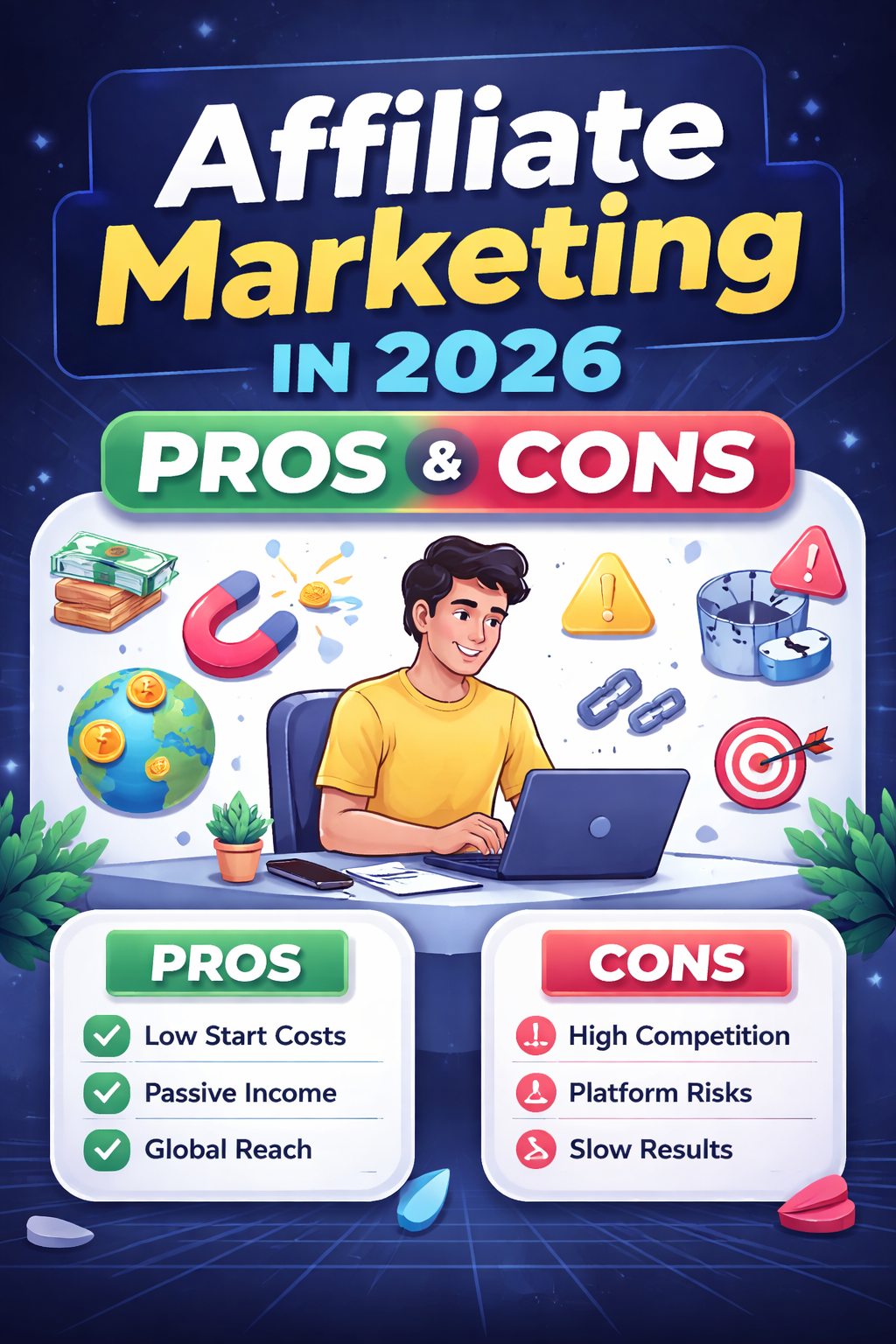
Affiliate Marketing in 2026: A Reality Check
Affiliate marketing has been around for decades, but 2026 marks a clear turning point. The industry has matured, competition has intensified, and both users and platforms have become significantly smarter.
The old promises of “set and forget” passive income are largely dead. What remains is a powerful business model — but only for those who understand its strengths, weaknesses, and the work required to make it sustainable.
This article is not written from theory. It reflects how affiliate marketing actually works in 2026, based on real-world execution, platform changes, and shifting user behavior.
The Pros of Affiliate Marketing in 2026
1. Low Entry Barrier Compared to Traditional Businesses
Affiliate marketing still offers one of the lowest barriers to entry in online business. You don’t need to create products, handle inventory, manage shipping, or deal with customer support at scale.
All you need is the ability to attract attention, build trust, and connect the right audience with the right offer.
2. Scalability Without Linear Costs
Unlike freelancing or agency work, affiliate marketing scales. A single piece of content can generate revenue for months or years without proportional increases in workload.
This is especially true when combining SEO, evergreen content, and long-tail traffic strategies.
3. Global Reach From Day One
In 2026, affiliates operate globally by default. With international payment systems, digital products, and localized content strategies, affiliates can reach audiences across borders with minimal friction.
4. Diversification of Income Streams
Affiliate marketing allows diversification across niches, platforms, and monetization models. Blogs, newsletters, social media, video platforms, and direct communities can all work together.
5. Performance-Based Revenue Model
You are paid based on results. That means your income is tied to effectiveness, not time spent. For skilled marketers, this is a massive advantage.
The Cons of Affiliate Marketing in 2026
1. Increased Competition and Saturation
Almost every profitable niche is crowded. Thin content no longer ranks, generic reviews no longer convert, and copy-paste strategies fail quickly.
Standing out requires experience, positioning, and genuine differentiation.
2. Dependency on Platforms You Don’t Control
Affiliates depend on search engines, social networks, email providers, and affiliate programs. Algorithm changes, account bans, or program closures can destroy income overnight.
3. Trust Is Harder to Build Than Ever
Users in 2026 are skeptical. They recognize affiliate links, sponsored content, and exaggerated claims instantly. Without real value and transparency, conversions suffer.
4. Delayed Gratification
Affiliate marketing is slow at the beginning. SEO takes months, authority takes time, and early revenue is often zero. Many quit before results appear.
5. Compliance, Disclosure, and Legal Complexity
Regulations around disclosures, cookies, tracking, and data protection continue to tighten. Affiliates must understand compliance to avoid legal and platform issues.
What Actually Works in Affiliate Marketing in 2026
Experience-Driven Content
First-hand experience beats AI-generated summaries. Screenshots, real usage, case studies, and honest comparisons outperform generic content.
Audience-First Monetization
Successful affiliates build audiences first, monetize second. Newsletters, communities, and direct relationships reduce dependency on algorithms.
Long-Term SEO and Brand Building
Brand searches, returning visitors, and trust signals matter more than keyword stuffing. Affiliates who think like publishers win.
Smart Offer Selection
High-quality offers with fair commissions, transparent tracking, and reliable payouts outperform “high commission but low trust” schemes.
Is Affiliate Marketing Still Worth It in 2026?
Yes — but only for those who treat it as a real business.
Affiliate marketing in 2026 rewards skill, patience, ethics, and strategic thinking. It punishes shortcuts, spam, and unrealistic expectations.
If you are willing to learn, adapt, and focus on value creation, affiliate marketing remains one of the most powerful online business models available.
Final Thoughts
The question is no longer “Can you make money with affiliate marketing?”
The real question is: Are you willing to do the work required to earn trust in a crowded digital world?
Those who are will still win — even in 2026.